
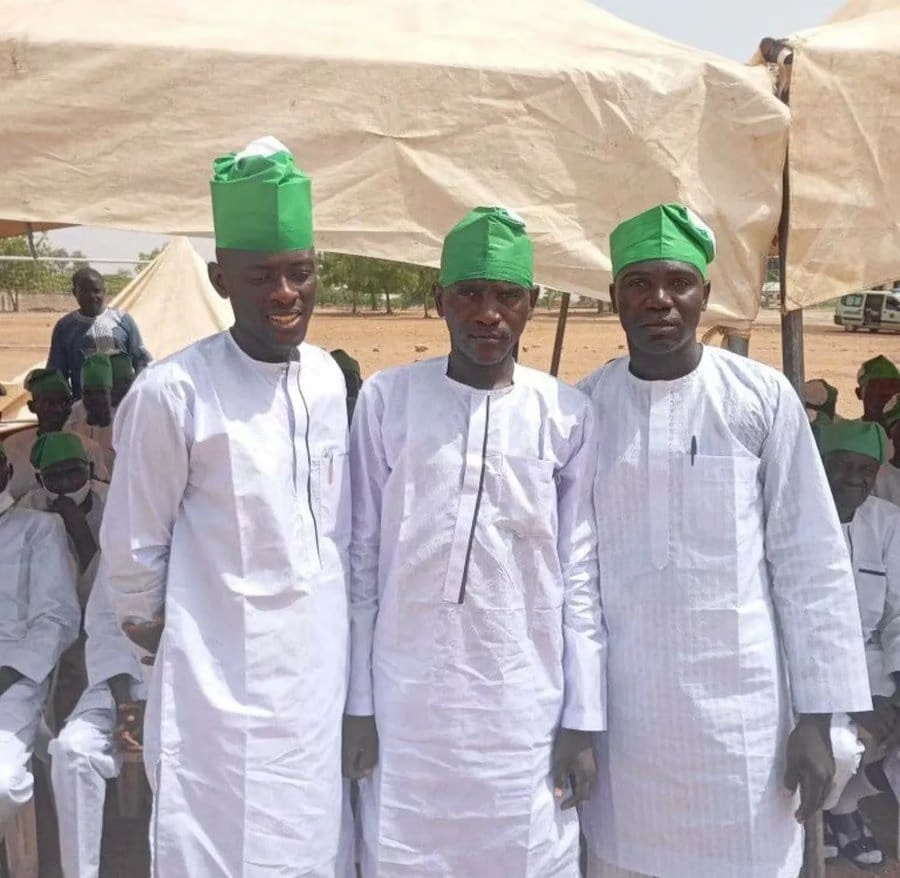
No fewer than 390 repentant Boko Haram members graduated from the Federal Government’s De-radicalisation, Rehabilitation and Reintegration programme in Gombe State.
The Chief of Defence Staff, Gen. Christopher Musa, said this during the graduation in Malam Sidi in the Kwami Local Government Area of Gombe State on Thursday, April 17, 2025.

He said that the graduating clients arrived at the camp in July 2024 and went through various rebuilding activities of the programme, which reshaped them and made them ready for reintegration into society.
Musa, who was represented by Maj.-Gen. Sunday Makollo, said that the non-kinetic approach by the Federal Government is positively impacting military operations in the Northeast.
He restated the Army’s commitment toward tackling security challenges in the country and ensuring peace and security.
Musa urged the clients to be agents of peace in their respective communities, while warning them against violating the oath they took and their allegiance to the Federal Republic of Nigeria.
On his part, the Commandant of the DRR Camp, Operation Safe Corridor, Col. Abiodun Johnson, said that the clients comprised six foreigners and 384 Nigerians who had been rehabilitated and were ready for reintegration
“A further breakdown of the 390 clients shows 13 clients hailed from Adamawa, one from Akwa-Ibom, 19 from Bauchi State, 218 from Borno, one from Cross River, one from Edo, five from Gombe, five from Jigawa,” Johnson said.
“Others are 15 from Kaduna State, 14 from Kano State, seven from Katsina State, three from Kebbi and five from Kogi, two from Nasarawa, five from Niger, one from Osun, two from Oyo.
“Four from Plateau, five from Sokoto State, three from Taraba, 47 from Yobe and eight from Zamfara.
“The foreign clients include one from Cameroon, one from Chad and four from Niger Republic.
“Similarly, six clients are Christians and 384 are Muslims. This information is essential for management planning and the reintegration process.”
He explained that during the DRR programme, the clients were trained in various skills of their choice, ranging from welding, tailoring, carpentry, bakery, laundry.
